
Why Choosing an Architect Matters More Than You Might Think

When most people think about architects, they picture floor plans, building elevations, and construction drawings.
And yes, architects do all of those things.
But in a cohousing community, their role is much bigger.
The architect helps shape how neighbors will interact. They influence whether children naturally gather in common spaces, whether older adults can comfortably age in place, whether spontaneous conversations happen on pathways and front porches, and whether the community feels connected or fragmented. In many ways, the architect helps transform a collection of homes into a neighborhood.
That is why selecting an architectural partner has been one of the most important decisions Gratitude Village has made so far.

Over the past couple of months, a team of Founding Members and Board Members invested many hours interviewing firms, checking references, comparing proposals, and asking difficult questions. It wasn’t a decision we took lightly because we knew this choice would influence the community for decades to come.
In the end, we selected Studio Co+Hab of Bozeman, Montana.
But getting there was quite a journey.
Five Outstanding Firms
One of the things that impressed me most during this process was the quality of the firms we interviewed.
Our Founding Member selection committee spoke with five firms from Colorado and around the country. Three were Colorado-based firms: Caddis in Boulder, NoMiLab in Englewood, and Yes And! Architecture in Denver. We also interviewed Schemata from Seattle and Studio Co+Hab from Bozeman.
Each firm brought something unique to the table.
After the initial interviews, the committee narrowed the field to three finalists: Caddis, NoMiLab, and Studio Co+Hab.
Then the Board stepped in for another round. Actually, two more rounds of interviews.
By that point, we weren’t simply asking whether a firm could design attractive buildings. We wanted to know how they approached sustainability, accessibility, affordability, community engagement, conflict resolution, decision-making, and collaboration.
We wanted to understand how they would work with us—not just for us.

There Was No Wrong Choice
One of the most challenging parts of the process was that there truly wasn’t a bad option.
Every finalist had glowing references.
Every firm had completed impressive projects.
Every team brought strengths that aligned with some aspect of our vision.
Caddis has completed numerous cohousing communities throughout North America and currently has several projects underway in the Denver area. Their experience in cohousing is extensive, and they have a deep team capable of supporting large and complex projects.
NoMiLab brought tremendous creativity and enthusiasm. Their urban design perspective was refreshing, and they had meaningful experience in the affordable housing world. We were also excited by the diversity represented within their leadership team and their genuine passion for what we are trying to create.
In many ways, narrowing the field became less about identifying weaknesses and more about determining which strengths mattered most for Gratitude Village.
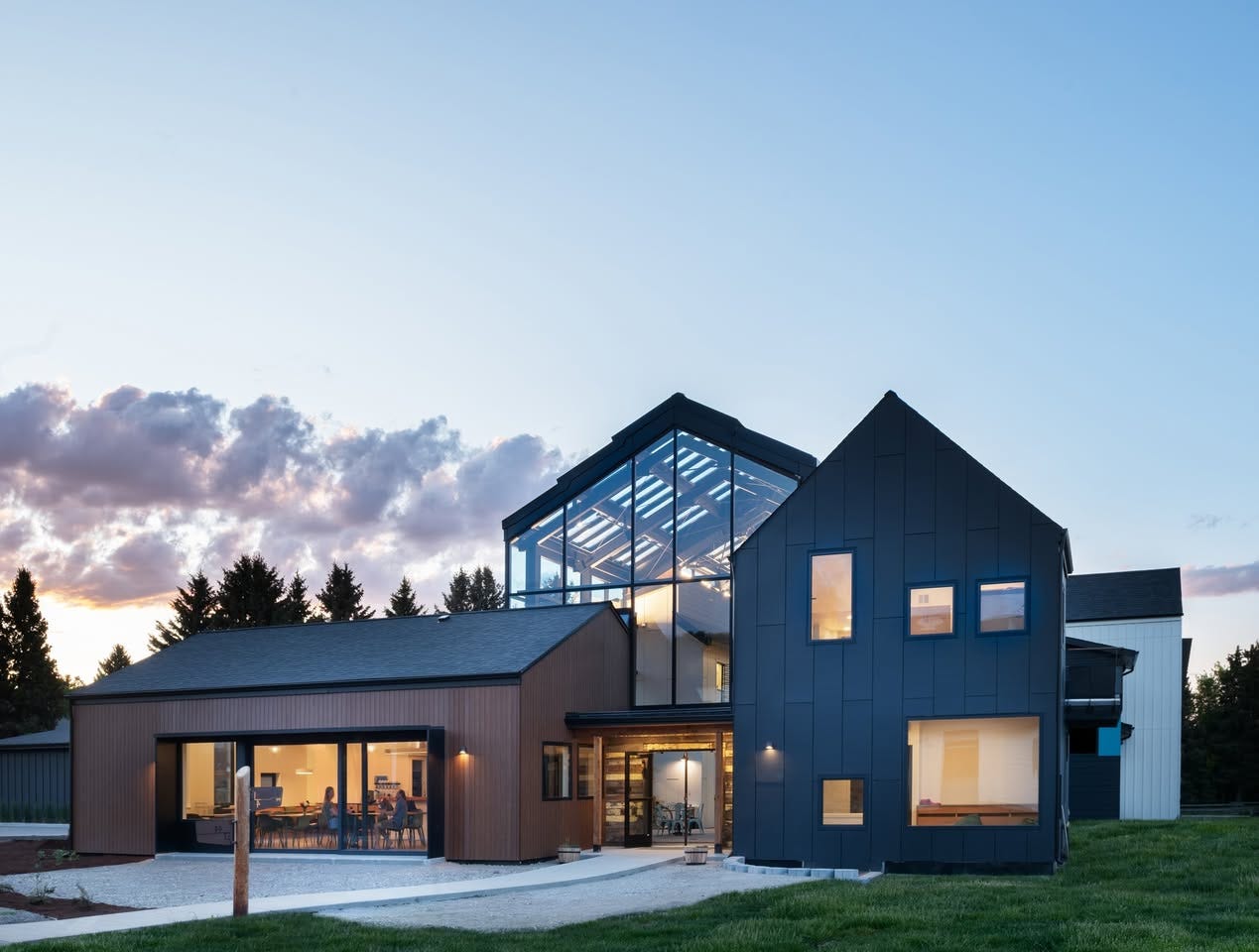
Why Studio Co+Hab Rose to the Top
Several things stood out about Studio Co+Hab.
First, their roots in the cohousing movement run deep.
The firm’s principals were trained by Charles Durrett and Kathryn McCamant, the individuals who introduced cohousing to the United States and helped launch the movement more than thirty years ago. They also designed and helped develop Bozeman Cohousing, widely recognized as the first Net Zero cohousing community in the country.
Second, their sustainability expertise aligned beautifully with our vision.
As many of you know, Gratitude Village hopes to become a model for environmentally responsible neighborhood design. We care deeply about energy efficiency, accessibility, resilience, and reducing our environmental footprint.
Principal architect Erik Bonnett’s experience with the Rocky Mountain Institute gave us confidence that Studio Co+Hab understands not only community design but also high-performance building strategies and sustainable development practices.
Third, we appreciated their nimbleness.
As a smaller firm, they demonstrated an ability to be responsive, flexible, and highly engaged. Throughout the interviews, we got the sense that they were genuinely excited about our project and eager to help us succeed.
And finally, we appreciated how they communicated.
This may sound like a small thing, but it mattered.
Development projects are complicated. There are countless moving pieces, technical terms, regulations, and design considerations.
Throughout the interview process, Studio Co+Hab consistently provided answers that were thoughtful, detailed, and easy to understand. They explained complex concepts clearly without oversimplifying them. Their responses felt transparent, practical, and grounded.
By the end of the interviews, many of us found ourselves returning to the same conclusion: these are people we want to spend the next several years working alongside.
The Real Work Begins Now
Selecting an architect feels like a major milestone because it is.
But it is also just the beginning.
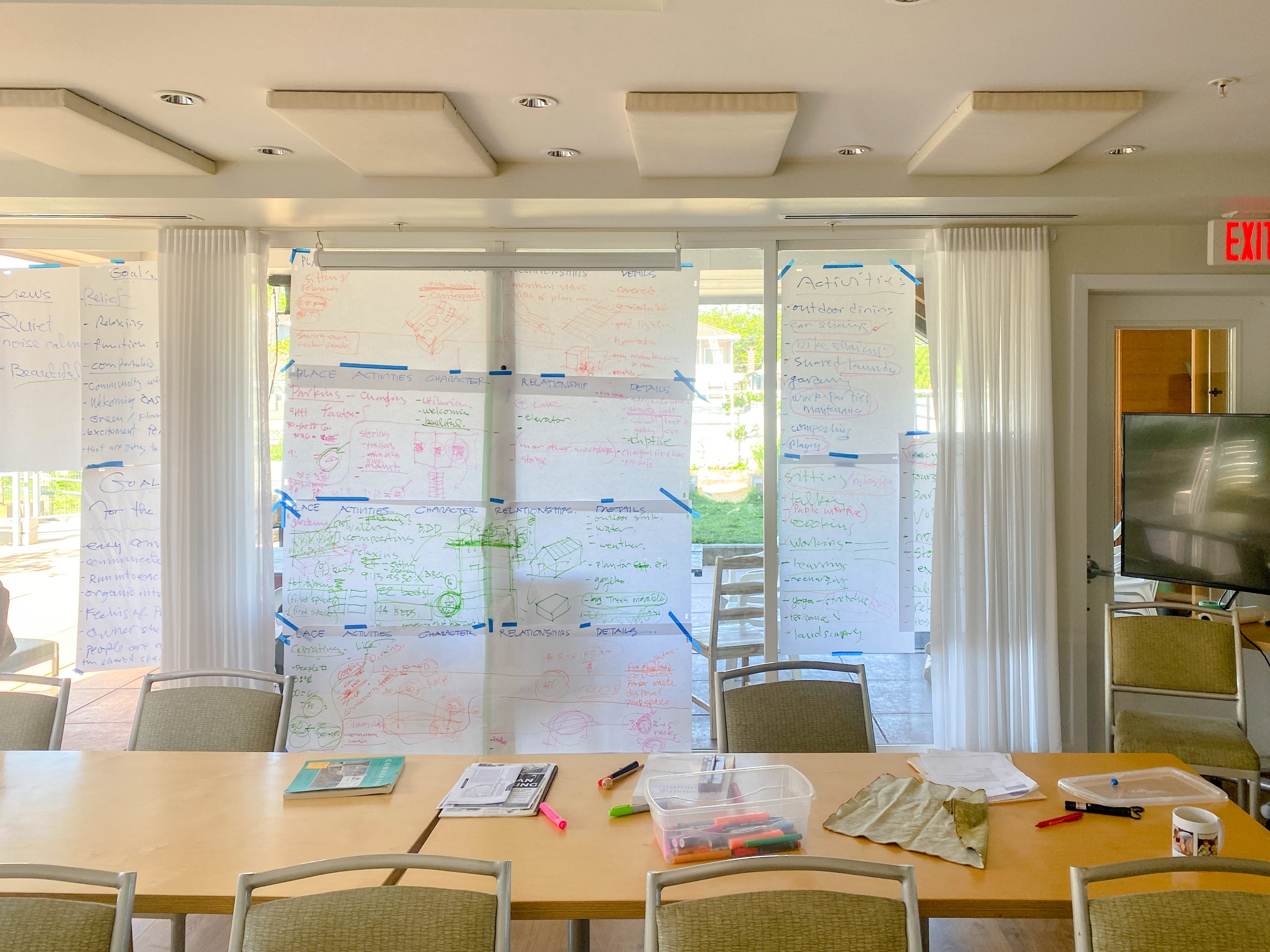
In the coming months, Studio Co+Hab will help facilitate a series of community design workshops where future residents, with input from board members and members of the development team, will come together to imagine what Gratitude Village can become.
We’ll discuss everything from home layouts and pedestrian pathways to gardens, gathering spaces, accessibility features, common house amenities and sustainability goals.
Some of the most important decisions have yet to be made.
And that’s exactly as it should be.
One of the beautiful things (also a challenging aspect) about cohousing is that future residents help shape the community long before construction begins. The neighborhood doesn’t emerge from a developer’s office. It emerges from hundreds of conversations, shared values, creative ideas, and collaborative decisions.
That’s what we’re beginning now.
As we move into the next phase of the journey, I’m excited to see our vision gradually take shape on paper—and eventually on the land itself.
Thank you to everyone who participated in the selection process, offered feedback, asked thoughtful questions, and helped us arrive at this decision.
The village is still being imagined.
And that’s one of the most exciting parts.
Before the Bell Rings Again...
Every major milestone in this process reminds me that Gratitude Village is being built long before the first foundation is poured. We are building relationships, trust, shared vision, and collective wisdom. The architect we selected will help shape the physical neighborhood, but it is the people gathering around this dream who will ultimately bring the village to life.