When the Numbers Don’t Quite Work
And what we're doing about it

There’s a moment I’ve come to recognize in many of the conversations we’ve had about Gratitude Village. It doesn’t happen right away. In the beginning, there is curiosity and a sense of possibility. People are exploring what it might mean to live in a way that feels more connected, more intentional, and, in many cases, more aligned with how they actually want to spend their time and energy.

Those early conversations often feel light. There’s room to imagine, to reflect, and to consider something different without needing to make a decision.
And then, gradually, the tone shifts.
The conversation becomes quieter. More grounded. People begin to look more closely at what it would actually take to step into something like this, and that’s where a different kind of reality comes into focus. It’s no longer about whether the idea resonates. It’s about whether it fits within the structure of someone’s life as it exists today.
I’ve sat with a lot of people in that space.
People who can clearly see themselves here. People who light up when they talk about shared meals, about knowing their neighbors, about raising kids or aging in a place where they’re not doing it all alone. People who understand, at a very real level, why this kind of community matters.

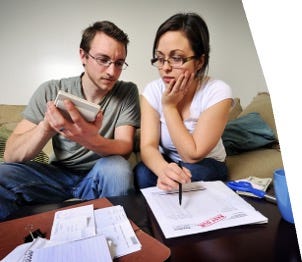
And then we start looking at the numbers.
The shift is subtle, but it’s there. A pause. A recalibration. The quiet realization that something that feels deeply aligned might not actually be within reach.
That’s the part that’s been hardest for me.
Because I don’t believe this kind of living should be limited to a small group of people. I don’t believe that connection, support, and a sense of belonging should depend on whether your financial situation happens to line up in a particular way. I believe all people should have the opportunity to live like this if they want to.
And yet, here we are, working within a system that makes that difficult.
There are moments when it feels like we are trying to build something more equitable while still standing inside structures that aren’t. We can design for connection. We can be intentional about accessibility and sustainability. But when it comes to cost and entry, the constraints are real, and they shape who is able to participate.
Sitting with that has not been easy.
It creates a tension between what we are trying to build and what is currently possible. It asks us to hold both the vision and the limitations at the same time, without pretending either one doesn’t exist.
That’s where Gratitude Village’s Equity Access Fund comes in.
Not as a perfect solution, and not as something that removes every barrier, but as a way of responding to that tension with intention. It is a recognition that there is often a gap between alignment and access, and that if we don’t address that gap, it will quietly determine who gets to be part of this community.
The goal is to create a bridge.
For some, that may mean support with an initial deposit. For others, it may mean a different pathway that makes participation possible in a way that better reflects their current reality. It won’t look the same for everyone, and it won’t solve everything.
But it is a step toward something more inclusive.
Because if we don’t take steps like this, then over time, the community we build will reflect only the people who were already able to say yes without hesitation.
That’s not the vision.
The vision is broader than that. It includes people who value connection, who want to live more sustainably, who are looking for a different way of being in community, even if their financial path doesn’t look exactly the same.
Making that real takes more than intention.
It takes acknowledging where the barriers are, even when it’s uncomfortable, and being willing to do the work to address them in practical ways. It requires us to stay in the tension long enough to find solutions that are thoughtful, sustainable, and aligned with what we say we care about.

I don’t believe this solves the problem. I do believe it moves us in the right direction.
Because this isn’t just about building something that works on paper.
It’s about building something that people can actually be part of.