
When the Dinner Bell Rings
On food, memory and why eating together still matters

I recently heard the sound of a dinner bell.
Not in a movie. Not at a festival. A real one — loud and metallic and impossible to ignore. And it took me back instantly to western Oklahoma, to long summer evenings and boots turning toward home.
As a child, I spent weeks each summer visiting my grandparents and their friends. On one farm, a large metal bell hung near the house. When it rang, you could hear it across the fields. Work paused. Dust settled. The boys headed in. The day shifted.
Years later, the summer after high school, I worked at a dude ranch. Meals were served family-style and guests were called to the dining hall by clanging a large metal triangle hanging outside. Horses were tied up. Laughter drifted in from the porch. And sometimes, as a server, I got to ring the triangle myself.

It was simple. Loud. A little joyful.
But more than that — it meant something.
It meant the day was gathering. It meant someone had prepared something. It meant there was a place for you at the table.
Somewhere along the way, dinner became complicated. Schedules stretched. Evenings compressed. Screens entered our living rooms — and eventually our pockets — drawing our attention inward. Meals turned into logistics. Who’s late? What’s fast? What can be reheated?
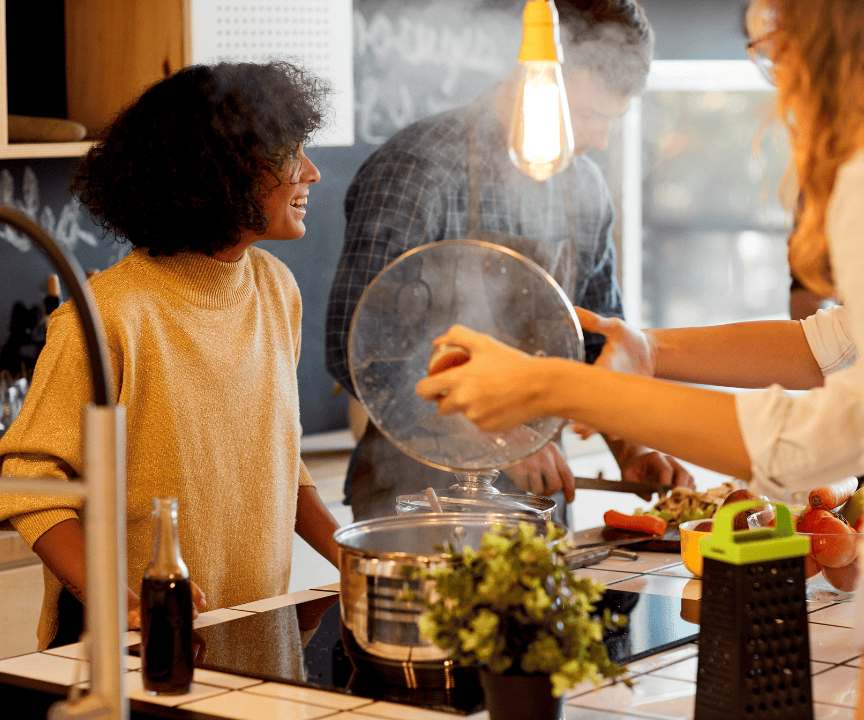
No one made a formal decision to stop gathering. It simply became harder to sustain.
And quietly, something shifted.
We stopped gathering as a matter of rhythm. We started eating as a matter of efficiency.
But there is something powerful that happens when people sit down together to eat.
Our nervous systems soften. Conversation slows our breathing. Children settle. Adults linger. Laughter comes more easily. The simple act of passing a bowl or refilling someone’s glass builds a kind of trust that doesn’t require big words.
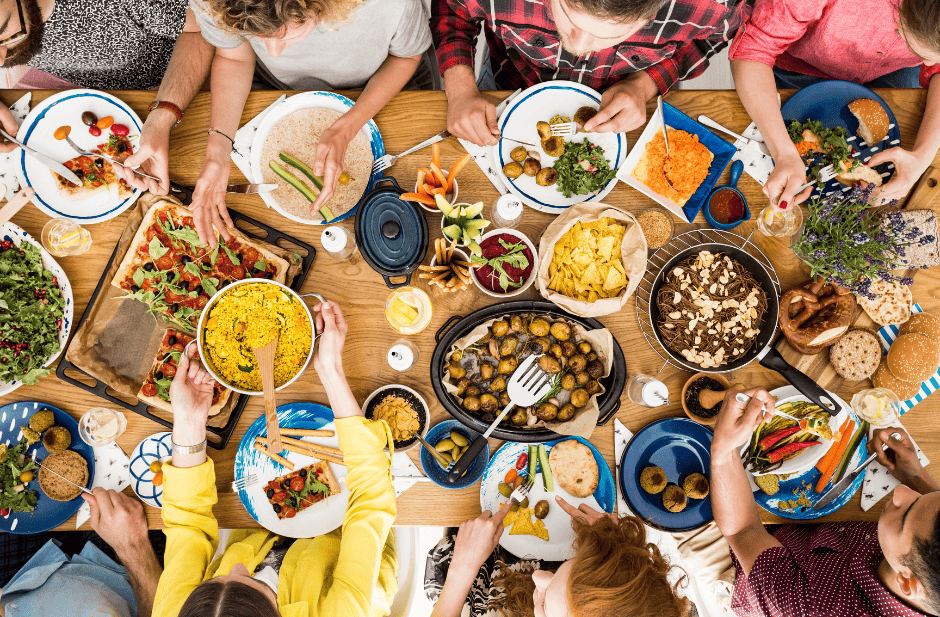
Shared meals are not a novelty. They are ancestral.
Long before cul-de-sacs and private kitchens, humans gathered around firelight. Food was shared because survival depended on it. Stories were told because memory mattered. The meal was never just about calories. It was about cohesion.
That’s part of what draws me to cohousing.
In intentional communities, meals aren’t a nightly obligation for every household. They are shared. Rotated. Supported. One group cooks. Another cleans. Children drift in and out. Elders sit without rushing. No one is required to attend every time — but the option is there.

And the option changes everything.
When you know there is a table waiting a several times a week, the mental load lightens. The isolation softens. You are reminded — in a very physical way — that you are part of something larger than your own kitchen.
At Gratitude Village, the common house isn’t just about square footage. It’s about social infrastructure. It’s about preventative health. It’s about affordability through shared resources. It’s about climate resilience and compost and gardens. But mostly, it’s about what happens when someone walks across a courtyard with an empty plate and returns with it full.
The dinner bell doesn’t have to be literal.
But the rhythm matters.
In a world that pulls us into private routines and parallel lives, the simple act of gathering around a long table may be one of the most radical things we can design.
Maybe the future of housing isn’t just about where we sleep.
Maybe it’s about where we eat.
Together.