

When a Dream Becomes a Place

For more than a decade, I was searching for a place I hoped already existed.
Like many people, I fell in love with the idea of cohousing long before I ever imagined helping create one. Whenever I had the opportunity, I visited communities, read books, attended presentations, and quietly imagined what it would be like to live in a neighborhood where people actually knew and cared about one another. I loved the idea of private homes combined with shared spaces, neighbors who gathered for meals, celebrated birthdays together, helped each other through life’s ups and downs, and intentionally created a sense of belonging. If you had asked me just a few years ago where I saw myself in the future, my answer would have been simple. I hoped to become a resident of such an existing cohousing community.
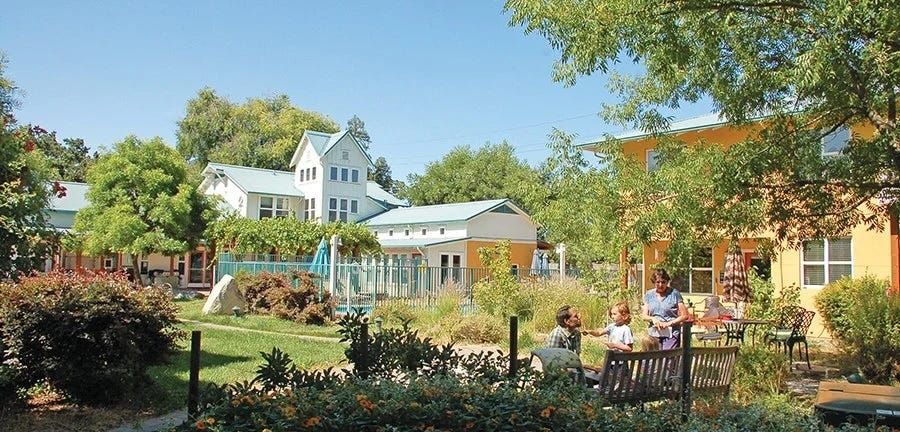
Starting one had never crossed my mind.
The problem was that the more I looked, the more I realized the community I was hoping to find either wasn’t available or wasn’t affordable. The few new communities being developed in Colorado were beautiful, but they were priced well beyond what I could afford. After spending ten years as an elementary school teacher and another ten years leading a math learning center, I had the retirement income of an educator—not a developer, real estate mogul, or tech executive.
I remember wondering how many other people were having the exact same experience. How many teachers, nurses, social workers, young families, retirees, or adults with disabilities were also looking for a neighborhood centered on connection, sustainability, accessibility, and belonging but simply couldn’t find one within reach? That question stayed with me for a long time until it slowly became another question.
What if I built one myself?
Even now, I smile a little when I think about that question.
At the time, it felt almost ridiculous. I knew absolutely nothing about real estate development. I couldn’t have explained what an entitlement was or told you the difference between a Phase I Environmental Site Assessment and a geotechnical report. Zoning? Utility studies? Development financing? I knew none of it.
What I did know was education. I knew how to bring people together around a shared vision. I knew how to build relationships, solve problems, ask questions, and keep moving forward even when I didn’t have all the answers.
As it turns out, those skills mattered more than I realized.
That one question eventually became Gratitude Village.
Over the past two years, I’ve watched something that began as a simple idea grow into an organization with an incredible Board of Directors, an experienced professional development team, dedicated volunteers, generous donors, and Founding Members who believed in this vision long before there was much to see. Together we’ve incorporated as a nonprofit, placed our first property under contract in Brighton, built wonderful relationships with the City of Brighton, and begun the long and often complicated process of turning a dream into a neighborhood.
Those are exciting milestones, and I’m proud of every one of them.
But if I’m being honest, there was still a part of me that thought of Gratitude Village as something we were working toward rather than something that already existed.
That changed during our Site Design Workshop in June.
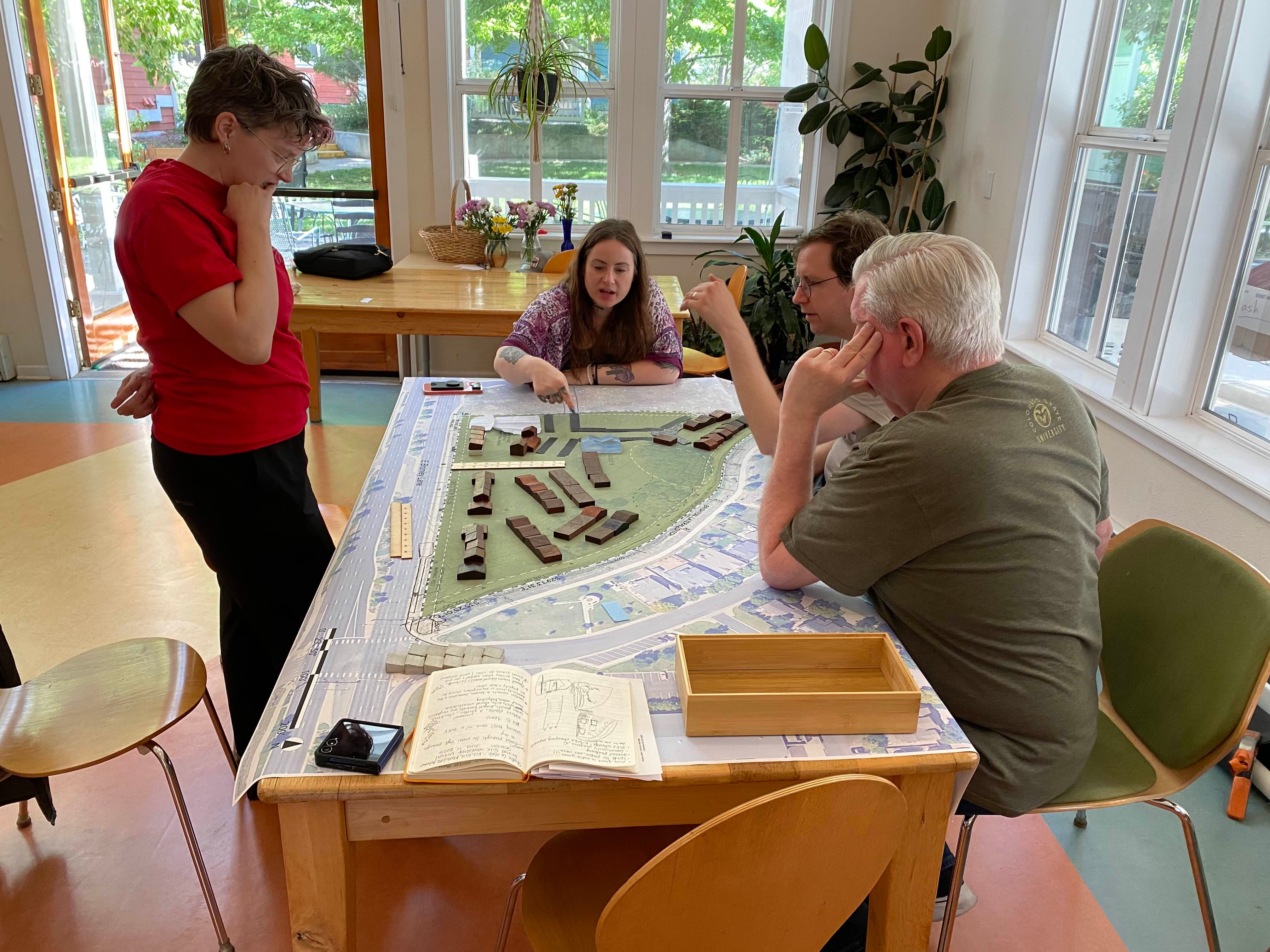
There was one moment that has stayed with me ever since. I found myself standing quietly in the back of the room just watching everyone. Nobody noticed because they were completely absorbed in what they were doing. Groups of future neighbors were gathered around maps of our Brighton property covered with wooden blocks representing different housing types, garages, the common house and commercial pads, pipe cleaners for paths and vegetation, black fabric strips for parking, brown ribbon for roads and other items symbolizing things like a fire pit, detention pond, picnic tables, and more! They were talking about where homes should go, how the walking paths might encourage people to stop and visit, where children could safely play, how we could make the community even more accessible, and where gardens and gathering spaces would fit best.
Not everyone agreed.
Honestly, I wouldn’t have expected them to.
What impressed me wasn’t that everyone had the same ideas. It was how they worked through their differences. People listened to one another. They asked thoughtful questions. Someone would suggest moving the Common House to create a stronger sense of arrival. Someone else would point out how another location better preserved open space or made it easier for people with mobility challenges to navigate the site. Every conversation seemed to make the design a little stronger because every perspective mattered.
As I watched those conversations unfold, something clicked.
For the first time, I realized I wasn’t looking at a project anymore.
I was looking at a community.
We just don’t have the buildings yet.
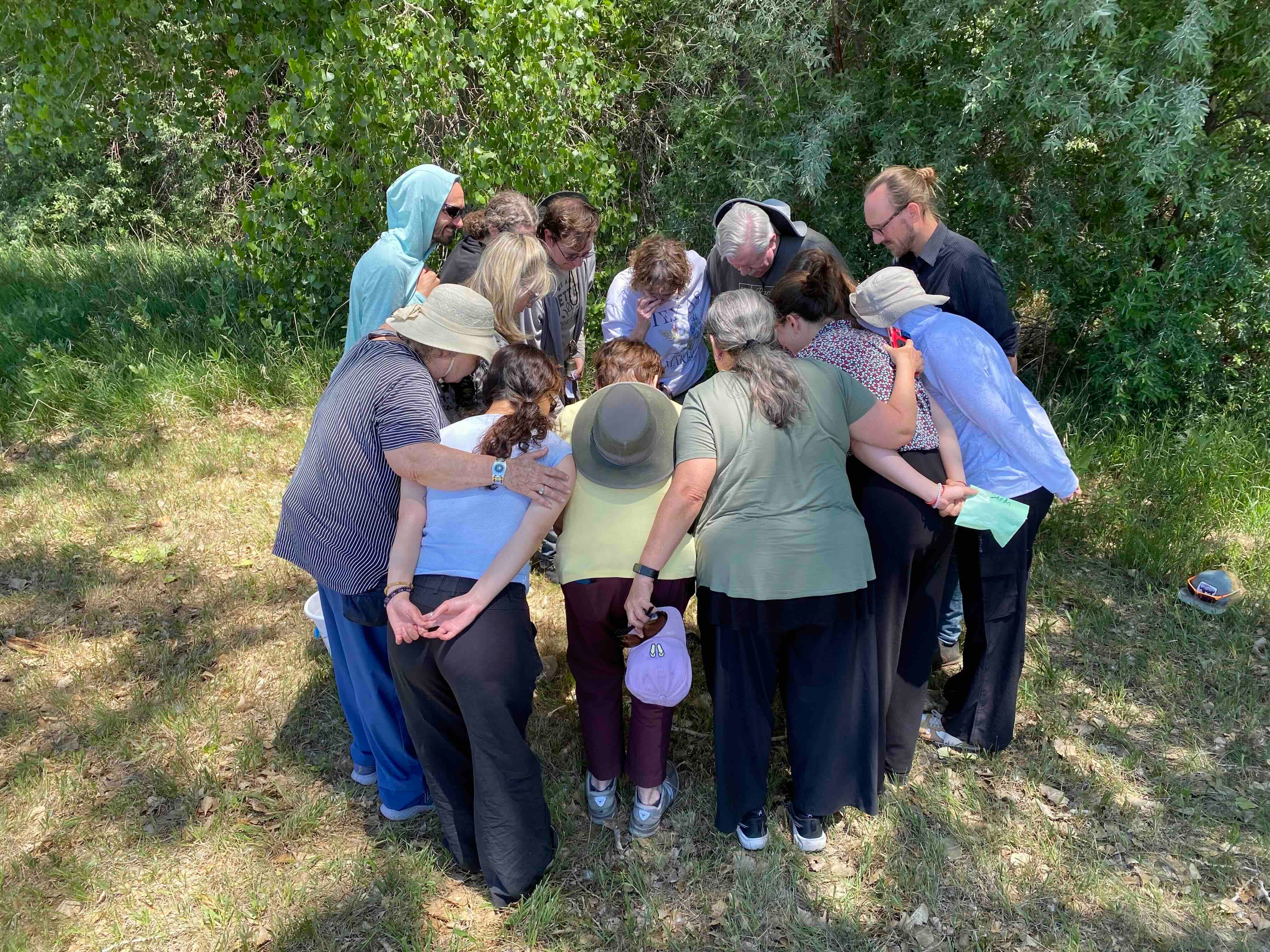
That’s one of the things I love most about cohousing. In most neighborhoods, the houses are built first and the neighbors meet later. Sometimes those relationships grow, and sometimes they don’t. In cohousing, we do it the other way around. We begin by getting to know each other. We learn how to listen, make decisions together, work through disagreements, celebrate milestones, and build trust. The physical neighborhood simply grows around the relationships that already exist.
By the time people receive the keys to their homes, they aren’t moving into a neighborhood full of strangers. They’re moving into a community they’ve already helped create.
I think another realization surprised me just as much.
Gratitude Village no longer feels like my project.
That probably sounds like a strange thing for a founder to say, but I actually think it’s exactly how it should be.
Every Founding Member has shaped this community in ways I never could have on my own. Our board members bring wisdom and expertise that make every decision better. Our consultants challenge us to think differently. Our volunteers, donors, and partners all leave their fingerprints on this journey. The neighborhood that eventually rises on our Brighton property won’t look exactly like the sketches I made a couple of years ago.
And I’m incredibly grateful for that.
It will be better than anything I could have imagined by myself because it has been shaped by so many thoughtful, caring people who all want the same thing: a place where people genuinely know, support, and care for one another.
When I look back now, it’s amazing to think that all of this started with one simple question. I thought I was searching for a place where I belonged.
Somewhere along the way, that search turned into helping create that place alongside an extraordinary group of people. We still have a long road ahead. We have financing to secure, permits to obtain, homes to design, and eventually streets, gardens, and a Common House to build.
But after spending that weekend watching future neighbors imagine their lives together, I don’t think anyone could convince me that Gratitude Village is still just an idea.
The buildings may still be ahead of us.
The community is already here.
And I can’t wait to see what we build together next.